Lead generation isn’t just a buzzword—it’s the lifeblood of every growing business. Whether you’re a startup or a global brand, turning strangers into qualified leads is the first step toward sustainable revenue.
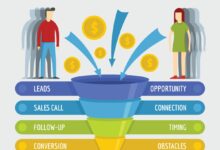


What Is Lead Generation and Why It Matters

At its core, lead generation is the process of attracting and converting prospects into individuals who have shown interest in your product or service. It’s the bridge between marketing and sales, where awareness turns into opportunity. Without a consistent flow of leads, even the best products can fail to gain traction.
The Evolution of Lead Generation
Lead generation has evolved dramatically over the past two decades. In the early 2000s, cold calling and trade shows dominated the landscape. Today, digital channels like social media, search engines, and content marketing have taken center stage. According to HubSpot, companies that prioritize lead generation grow 5x faster than those that don’t (HubSpot, 2023).
- Pre-digital era: Direct mail, phone calls, print ads
- Rise of the internet: Email campaigns, landing pages
- Modern era: AI-driven personalization, chatbots, social selling
This shift has made lead generation more scalable, measurable, and cost-effective than ever before.
Why Lead Generation Is Critical for Business Growth
Imagine pouring money into advertising, only to have no one follow up. That’s what happens without a solid lead generation strategy. Quality leads fuel your sales pipeline, reduce customer acquisition costs, and improve conversion rates. A study by Salesforce found that 68% of marketing departments cite lead generation as their top challenge—proving its central role in business success (Salesforce State of Marketing Report).
“You don’t make sales. You help people make purchases.” – Daniel Pink, author of To Sell Is Human
Types of Leads in the Sales Funnel
Not all leads are created equal. Understanding the different types helps you tailor your approach and set realistic expectations for conversion.
Marketing Qualified Leads (MQLs)
These are prospects who have engaged with your marketing efforts—such as downloading an eBook, attending a webinar, or subscribing to a newsletter—but aren’t yet ready to buy. They’ve shown interest, but further nurturing is required.
- Indicators: Multiple page visits, content downloads, email opens
- Next step: Nurture via email sequences and targeted content
MQLs are typically managed by the marketing team until they meet predefined criteria for handoff to sales.
Sales Qualified Leads (SQLs)
SQLs are MQLs who have been vetted and deemed ready for direct sales engagement. They’ve often requested a demo, filled out a contact form with specific needs, or responded positively to outreach.
- Indicators: Requested pricing, scheduled a call, mentioned budget/timeline
- Next step: Direct contact by sales representatives
The transition from MQL to SQL should be based on clear, agreed-upon criteria between marketing and sales teams.
Product Qualified Leads (PQLs)
Common in SaaS and freemium models, PQLs are users who have experienced your product firsthand—often through a free trial or freemium version—and demonstrated behaviors indicating purchase intent.
- Indicators: Reached feature limits, used core functionality, invited team members
- Next step: In-app messaging, upgrade prompts, sales follow-up
PQLs often convert faster because they’ve already seen value in your solution.
Top 7 Lead Generation Strategies That Work in 2024
With countless tactics available, it’s essential to focus on strategies that deliver measurable results. Here are seven proven methods to generate high-quality leads.
1. Content Marketing and SEO
Creating valuable, search-optimized content is one of the most effective long-term lead generation strategies. Blogs, guides, and videos attract organic traffic and position your brand as an authority.
- Focus on buyer intent keywords (e.g., “best CRM for small business”)
- Use gated content (e.g., whitepapers, templates) to capture emails
- Optimize landing pages with clear CTAs
According to Backlinko, pages ranking in the top 10 on Google receive 90% of all organic clicks (Backlinko, 2023). By aligning your content with search intent, you attract visitors who are already looking for solutions you offer.
2. Social Media Lead Generation
Platforms like LinkedIn, Facebook, and Instagram offer powerful tools for targeting and capturing leads. LinkedIn Lead Gen Forms, for example, allow users to submit their information without leaving the platform.
- Use lead ads with pre-filled forms
- Host live Q&A sessions to engage prospects
- Leverage retargeting to re-engage visitors
A report by Hootsuite shows that 73% of marketers believe social media marketing has been “somewhat effective” or “very effective” for their business (Hootsuite Digital Trends 2024).
3. Email Marketing Campaigns
Email remains one of the highest ROI channels for lead generation. When done right, it nurtures relationships and drives conversions over time.
- Build your list with lead magnets (e.g., free checklist, webinar)
- Segment audiences based on behavior and interests
- Use automation to send personalized follow-ups
Mailchimp reports that segmented campaigns generate 30% more opens and 50% more clicks than non-segmented ones. This level of personalization increases the chances of converting leads into customers.
4. Webinars and Virtual Events
Webinars are a powerful way to demonstrate expertise, engage prospects in real-time, and collect contact information. They work especially well for B2B companies selling complex solutions.
- Promote with targeted ads and email invites
- Offer exclusive insights or live demos
- Follow up with attendees and no-shows
GoToWebinar found that 60-80% of webinar registrants typically attend live, and 92% of marketers say webinars are an effective lead generation tool (GoToWebinar Stats).
5. Paid Advertising (PPC and Retargeting)
Pay-per-click (PPC) advertising on Google and social media allows you to reach high-intent audiences quickly. Retargeting ensures you stay top-of-mind with visitors who didn’t convert initially.
- Use Google Ads for search-based intent (e.g., “CRM software”)
- Run LinkedIn ads for B2B lead generation
- Implement Facebook pixel for retargeting website visitors
WordStream reports that businesses make an average of $2 in revenue for every $1 spent on Google Ads—making it one of the most cost-effective lead generation tools available.
6. Referral and Partner Programs
Leveraging existing customers and strategic partners can generate high-quality, low-cost leads. People trust recommendations from peers more than any ad.
- Launch a customer referral program with incentives
- Partner with complementary businesses for co-marketing
- Use affiliate networks to scale outreach
Research by Nielsen shows that 92% of consumers trust recommendations from friends and family over all other forms of advertising.
7. Chatbots and Conversational Marketing
Modern chatbots powered by AI can engage website visitors 24/7, qualify leads, and book meetings—all without human intervention.
- Deploy chatbots on high-traffic pages (e.g., pricing, homepage)
- Use qualifying questions to segment leads
- Integrate with CRM for seamless handoff
Drift, a leader in conversational marketing, reports that companies using chatbots see a 30-50% increase in qualified leads.
Tools and Technologies for Effective Lead Generation
Technology plays a crucial role in scaling and optimizing your lead generation efforts. The right tools can automate workflows, improve targeting, and enhance data analysis.
Customer Relationship Management (CRM) Systems
A CRM like HubSpot, Salesforce, or Zoho CRM is essential for tracking leads, managing interactions, and measuring performance. It serves as the central hub for all lead-related data.
- Automate lead scoring and assignment
- Track lead lifecycle from first touch to close
- Generate reports on conversion rates and ROI
Integrating your CRM with marketing tools ensures seamless data flow and reduces manual entry errors.
Marketing Automation Platforms
Tools like ActiveCampaign, Marketo, and Mailchimp allow you to automate email sequences, segment audiences, and trigger actions based on user behavior.
- Send personalized content based on lead behavior
- Set up drip campaigns for nurturing
- Score leads based on engagement levels
Automation not only saves time but also improves consistency and relevance in your outreach.
Lead Capture and Form Tools
Tools like Typeform, JotForm, and HubSpot Forms make it easy to create high-converting lead capture forms without coding.
- Use conditional logic to personalize form fields
- Embed forms on blogs, landing pages, and social media
- A/B test form design and copy for better performance
Even small improvements—like reducing form fields from 5 to 3—can increase conversions by up to 50%, according to Formstack.
Measuring the Success of Your Lead Generation Campaigns
Generating leads is only half the battle. To ensure long-term success, you must measure performance and optimize based on data.
Key Metrics to Track
Not all metrics are created equal. Focus on those that directly impact revenue and efficiency.
- Conversion Rate: Percentage of visitors who become leads
- Cost Per Lead (CPL): Total spend divided by number of leads generated
- Lead-to-Customer Rate: Percentage of leads that convert to paying customers
- Return on Ad Spend (ROAS): Revenue generated per dollar spent on ads
Tracking these metrics helps identify which channels and campaigns deliver the best ROI.
A/B Testing for Optimization
Small changes can have a big impact. A/B testing allows you to compare two versions of a webpage, email, or ad to see which performs better.
- Test headlines, CTAs, images, and form lengths
- Run tests with statistically significant sample sizes
- Implement winning variations across your campaigns
For example, HubSpot increased conversions by 27% simply by changing a CTA button from green to red.
Attribution Modeling
Understanding which touchpoints contribute to a conversion is critical for allocating budget effectively. Attribution models help you see the full customer journey.
- First-touch: Credits the first interaction
- Last-touch: Credits the final interaction
- Multitouch: Distributes credit across multiple touchpoints
Google Analytics 4 offers advanced attribution modeling to help marketers make data-driven decisions.
Common Lead Generation Mistakes to Avoid
Even experienced marketers make errors that undermine their lead generation efforts. Being aware of these pitfalls can save time, money, and frustration.
Targeting the Wrong Audience
One of the most common mistakes is casting too wide a net. If your messaging doesn’t resonate with a specific buyer persona, your conversion rates will suffer.
- Solution: Develop detailed buyer personas based on research
- Use audience segmentation in ads and emails
- Refine targeting based on performance data
Creating content for everyone often means it resonates with no one.
Ignoring Lead Nurturing
Only 25% of leads are ready to buy immediately. The rest need nurturing through the buyer’s journey.
- Solution: Create email drip campaigns with educational content
- Use retargeting ads to stay top-of-mind
- Offer case studies and testimonials to build trust
Marketo reports that nurtured leads make 47% larger purchases than non-nurtured leads.
Poor Follow-Up Processes
A lead is only as good as your ability to follow up. Delayed or generic responses can kill momentum.
- Solution: Automate initial follow-ups with personalized messages
- Set SLAs (Service Level Agreements) for sales response time
- Use CRM alerts to prevent leads from going cold
Research by InsideSales shows that the odds of qualifying a lead drop by 10x if the follow-up takes longer than 5 minutes.
Future Trends in Lead Generation
The lead generation landscape is constantly evolving. Staying ahead of trends ensures your strategies remain effective and competitive.
AI and Predictive Analytics
Artificial intelligence is transforming how we identify and engage leads. Predictive analytics can forecast which leads are most likely to convert based on historical data.
- Use AI to score leads in real-time
- Personalize content at scale
- Automate outreach with smart chatbots
Companies like Salesforce Einstein and HubSpot AI are already integrating these capabilities into their platforms.
Voice Search and Smart Assistants
With the rise of Alexa, Siri, and Google Assistant, optimizing for voice search is becoming crucial. Voice queries are often longer and more conversational.
- Optimize content for natural language and question-based queries
- Use structured data (schema markup) to improve visibility
- Focus on local SEO for “near me” searches
Comscore predicts that by 2025, 50% of all searches will be voice-based.
Privacy-First Lead Generation
With increasing regulations (GDPR, CCPA) and browser changes (e.g., third-party cookie deprecation), marketers must adapt to a privacy-first world.
- Focus on first-party data collection
- Be transparent about data usage
- Offer value in exchange for consent
Building trust is no longer optional—it’s a prerequisite for sustainable lead generation.
What is lead generation?
Lead generation is the process of attracting and converting prospects into potential customers who have shown interest in your product or service, typically by capturing their contact information for further nurturing and sales outreach.
What are the best lead generation strategies in 2024?
The most effective strategies include content marketing with SEO, social media lead ads, email marketing, webinars, paid advertising (PPC), referral programs, and AI-powered chatbots. The best approach depends on your audience, industry, and resources.
How do you measure lead generation success?
Key metrics include conversion rate, cost per lead (CPL), lead-to-customer rate, and return on ad spend (ROAS). Tracking these helps optimize campaigns and allocate budget effectively.
What’s the difference between MQL and SQL?
A Marketing Qualified Lead (MQL) has engaged with marketing content but isn’t sales-ready. A Sales Qualified Lead (SQL) has been vetted and is ready for direct sales contact based on intent and fit.
How can AI improve lead generation?
AI can enhance lead generation by predicting lead quality, personalizing content, automating follow-ups, and optimizing ad targeting—resulting in higher conversion rates and lower acquisition costs.
Lead generation is not a one-time campaign but an ongoing strategy that fuels business growth. From understanding lead types to leveraging cutting-edge tools and avoiding common pitfalls, a well-structured approach can transform your marketing efforts. By focusing on value, relevance, and data-driven optimization, you can build a pipeline that consistently delivers results. The future of lead generation lies in personalization, automation, and trust—embrace these principles to stay ahead in 2024 and beyond.
Further Reading:
